
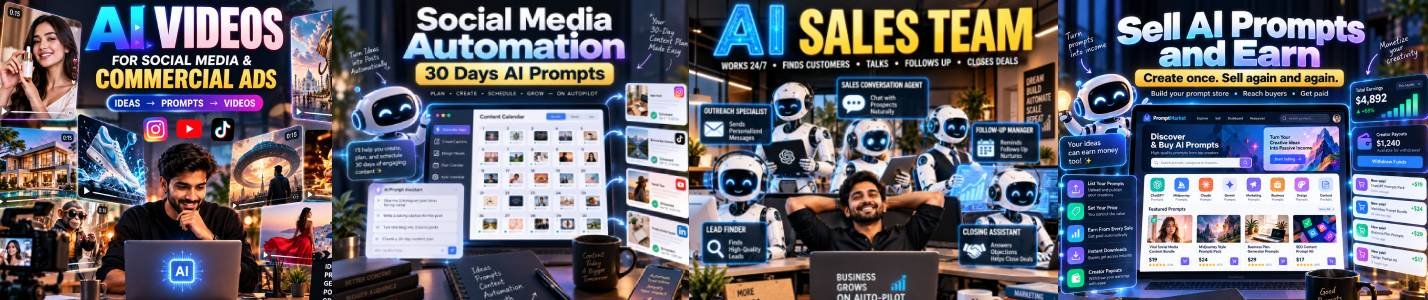

The High Engagement Social Media Content Strategy and Planning Prompt provides a robust framework for creators, marketing managers, and influencers to develop high-performing content calendars. By leveraging the advanced reasoning capabilities of large language models like ChatGPT and Claude, this tool transforms abstract brand goals into a structured, executable roadmap for viral success. Users can generate tailored content pillars, hook-driven script outlines, and platform-specific caption strategies designed to maximize audience retention and engagement. Whether producing short-form content for social media reels, educational threads, or brand-building storytelling, this strategy tool ensures consistent quality and strategic alignment. The system is engineered to analyze target demographics and platform algorithms, helping users move beyond guesswork to data-informed creative production. This solution is essential for professionals seeking to scale their digital presence through efficient, high-impact content planning that resonates with modern audiences across competitive social landscapes.
Contents
About Prompt
Prompt Type: Strategic Marketing & Content Planning
Prompt Nature: LLM System Prompt for Content Strategy
Niche: Social Media Marketing & Content Creation
Category: Business & Professional Development
Language: English
Prompt Title: High Engagement Social Media Content Strategy and Planning Prompt
Prompt Platforms: ChatGPT, Claude, Gemini, Perplexity
Target Audience: Content Creators, Social Media Managers, Digital Marketers
Skill Level: Intermediate to Advanced
Visual Style: Not Applicable
Optional Notes: Focuses on high-retention hooks and algorithmic optimization for viral growth.
How to Use This Prompt
- Step 1: Copy the entire Master Prompt below and paste it into a high-reasoning LLM interface like ChatGPT or Claude AI.
- Step 2: Provide the AI with your specific brand details, current target audience demographics, and primary marketing objectives for the upcoming month.
- Step 3: Review the generated content pillars and requested calendar structure, requesting refinements for tone or platform-specific nuances as needed.
Required Input: Brand niche, target audience, primary marketing goals, and preferred social media platforms (e.g., Instagram, TikTok, LinkedIn).
Customize: You can modify the brand voice, the frequency of posts, the ratio of educational vs. entertaining content, and the specific CTA styles.
Prompt
Phase 1: Brand Analysis. Analyze the user’s provided niche, target audience, and business goals. Identify the core ‘Value Proposition’ for the audience. Define the ‘Brand Voice’ (e.g., authoritative, witty, empathetic, or minimalist).
Phase 2: Content Pillars. Develop 4 distinct content pillars that balance authority, community engagement, behind-the-scenes transparency, and viral-potential entertainment. Each pillar must serve a specific psychological trigger for the audience.
Phase 3: The 30-Day Calendar Strategy. Create a structured table containing 30 days of content ideas. For each entry, provide:
1. Day/Topic.
2. Hook (The first 3 seconds of the video or the first sentence of the caption).
3. Value Delivery (The core message).
4. Call to Action (CTA) (Specific, low-friction, high-conversion).
5. Visual/Audio Suggestion (Lighting, pacing, or trending audio style).
Phase 4: Optimization Rules. Apply these non-negotiable rules for all content:
– Hooks must be polarizing, curiosity-driven, or pain-point focused.
– Content must be optimized for short-form video (Reels/TikTok) and carousel formats.
– Every post must include a ‘Save-ability’ factor (e.g., actionable tips, industry secrets, or checklists).
– Engagement must be prioritized by asking specific questions in the caption.
Phase 5: Output Format. Present the strategy as a professional, actionable document. Use Markdown tables for the calendar. End with a ‘Success Metric’ checklist for the user to track growth.
Constraints: Avoid generic platitudes. Every suggestion must be specific to the user’s niche. If a trend is identified, explain how to adapt it to the brand’s unique identity rather than just copying it. Ensure the tone is professional, strategic, and results-oriented.
Prompt Variations
1. The Viral-First Growth Prompt: Focuses exclusively on high-velocity trends, utilizing a ‘Trend-Jacking’ framework for TikTok and Reels to maximize reach for new accounts.
2. The B2B Authority Builder: Shifts the focus to LinkedIn and Twitter/X, emphasizing white papers, industry insights, and professional thought leadership to drive lead generation.
3. The Community-Centric Strategy: Prioritizes user-generated content, Q&A sessions, and deep-dive community engagement to build brand loyalty and long-term retention.
4. The Minimalist Luxury Aesthetic: Focuses on high-end visual storytelling, aspirational tone, and curated, low-frequency content designed for high-end lifestyle or fashion brands.
5. The Educational Micro-Course Framework: Structures the entire month as a sequential learning experience, turning the social media feed into a free value-packed mini-course.
Negative Prompt
Expert Usage Tips
Tip 1: Always provide your current social media analytics to the AI to help it understand what has worked in the past. It will use this data to refine future suggestions.
Tip 2: Use the ‘Iterative Refinement’ method by asking the AI to ‘rewrite the hooks for a younger demographic’ or ‘make the tone more professional’ after the initial output.
Tip 3: If you are struggling with visual production, ask the AI to generate specific ‘Shot Lists’ or ‘Video Storyboards’ for the high-priority posts on your calendar.
Tip 4: Integrate your own unique brand stories or recent customer success stories into the prompts to ensure the content feels authentic and not purely AI-generated.
Tip 5: Combine this strategy with a scheduling tool to automate the posting process, allowing you to focus entirely on the creative and engagement aspects of your strategy.