

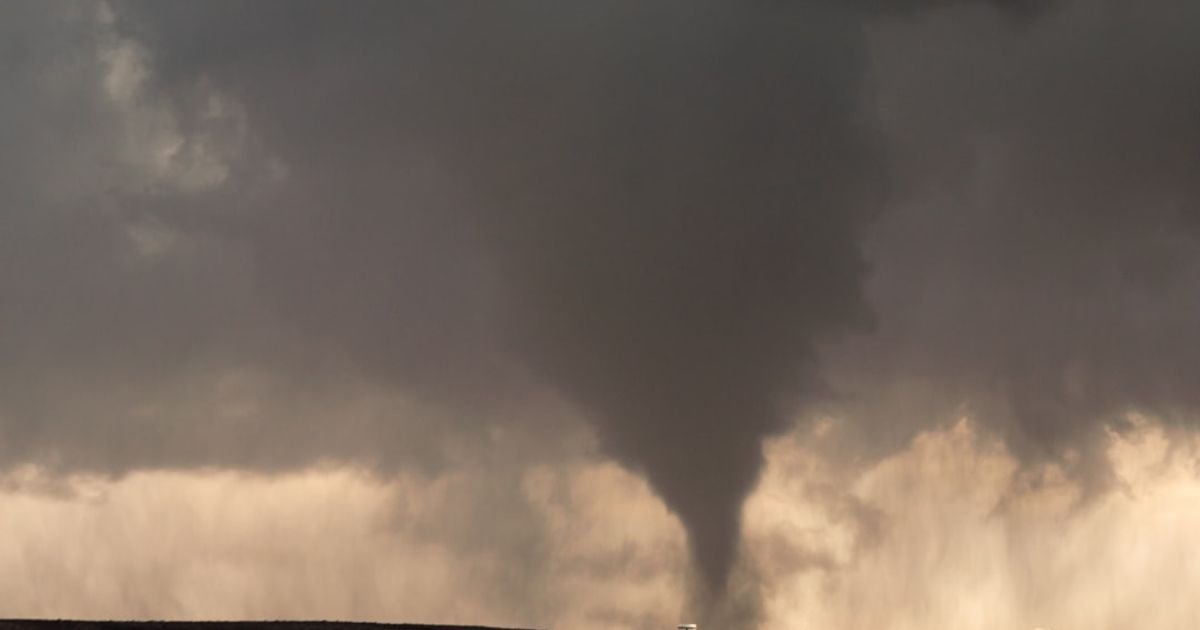
About Prompt
- Prompt Type – Dynamic
- Prompt Platform – ChatGPT, Grok, Deepseek, Gemini, Copilot, Midjourney, Meta AI and more
- Niche – Weather FX
- Language – English
- Category – Storm Simulation FX
- Prompt Title – Tornado Formation Over Plains VEO 3 Prompt
Prompt Details
### Explanation of the “VEO 3” Prompt Structure
This prompt is built on the **VEO 3 (Visualization, Environment, Objectives)** framework, a best practice for complex generative AI tasks, especially in visual effects.
* **Part 1: Core Visualization (V):** This is the heart of the prompt. It describes the primary subject and its actions in detail—the “what.” It focuses on the tornado’s lifecycle from formation to maturity.
* **Part 2: Environmental Context (E):** This section builds the world around the subject—the “where” and “when.” It defines the atmosphere, landscape, lighting, and other weather phenomena that create a believable and immersive scene.
* **Part 3: Technical & Artistic Objectives (O):** This is the “how” and “why.” It provides the AI with specific instructions on the desired style, technical execution, camera work, and mood. This part is crucial for controlling the final output for professional FX purposes.
The “Dynamic” nature comes from bracketed placeholders `[like this]`, allowing you to easily swap out key variables to generate countless variations from a single master prompt.
—
### Optimized AI Prompt Template: Tornado Formation Over Plains (VEO 3)
**Prompt Role:** You are an advanced Weather FX Simulation Engine specializing in physically-based rendering and computational fluid dynamics. Your purpose is to generate hyper-realistic, high-fidelity storm simulations for use in cinematic productions and scientific visualization.
**Primary Directive:** Generate a dynamic, multi-stage visual simulation of a powerful tornado forming and maturing over vast open plains. The simulation must adhere to the following detailed VEO 3 structure.
—
### **Part 1: Core Visualization (V) – The Tornado’s Lifecycle**
* **1.1. Incipient Stage (Formation):**
* **Mesocyclone:** Depict a large, menacing, and clearly rotating supercell mesocyclone. The base of the storm should be low and dark.
* **Wall Cloud:** A well-defined, rotating wall cloud descends from the mesocyclone base. Show rapid vertical motion and scud clouds being drawn into the updraft.
* **Funnel Cloud:** A smooth, laminar condensation funnel begins to descend from the wall cloud. Its initial shape is a narrow cone, and its rotation should be visibly fast but not yet chaotic.
* **Touchdown:** The moment the vortex makes contact with the ground. Visualize a sudden, explosive burst of dust, soil, and vegetation at the point of contact, creating a swirling debris cloud that rises to meet the condensation funnel.
* **1.2. Mature Stage (Intensification):**
* **Vortex Structure:** The tornado evolves into its specified shape: `[Tornado Shape: e.g., classic stovepipe, wide wedge, multi-vortex, cone]`. The condensation funnel should be fully condensed to the ground, and the surface-level motion should be violent.
* **Intensity:** The simulation must reflect the power of a `[Tornado EF-Scale: e.g., EF-2, EF-4, EF-5]` tornado. This should be evident in the rotational speed, the width of the damage path, and the type/size of debris being lofted.
* **Sub-vortices:** If the intensity is EF-3 or higher, include smaller, intense sub-vortices rotating around the main circulation, causing concentrated areas of extreme damage on the ground.
* **Debris Cloud:** The debris cloud at the base is dense, dark, and filled with `[Debris Type: e.g., rich topsoil, dry grass, splintered wood, structural fragments]`. Show larger, identifiable objects being pulled into the vortex and thrown outwards.
—
### **Part 2: Environmental Context (E) – The Setting**
* **2.1. Atmosphere & Sky:**
* **Supercell Structure:** The parent thunderstorm is a massive, sculpted supercell. Show a colossal, overshooting top penetrating the stratosphere, a hard-edged anvil cloud stretching for miles, and textured mammatus clouds underlit by the sun.
* **Atmospheric Color:** The sky has an ominous, `[Atmospheric Color Palette: e.g., sickly yellow-green hue, deep slate-grey, dramatic orange and purple sunset tones]`, which is characteristic of severe tornadic environments.
* **Lightning:** In-cloud (sheet) lightning should illuminate the storm’s core frequently, revealing its internal structure. Occasional, powerful cloud-to-ground (CG) lightning strikes should occur in the distance.
* **2.2. Landscape & Terrain:**
* **Topography:** The setting is `[Landscape Details: e.g., vast, flat prairies of Kansas; rolling green hills of Oklahoma; dry, sparse plains of West Texas]`. The ground should show texture, not be a flat plane.
* **Vegetation:** Populate the landscape with appropriate flora, such as swaying prairie grass, crops (corn, wheat), or scattered hardy trees, which should be visibly affected by the powerful inflow winds.
* **Man-Made Elements:** Include `[Man-made Structures: e.g., a lonely two-lane asphalt road, a weathered wooden farmhouse with a barn, tall steel power line towers, a small grain silo]`. These elements serve as a scale reference and are targets for destruction.
* **2.3. Lighting & Time of Day:**
* **Time:** The simulation is set during `[Time of Day: e.g., Late Afternoon, Golden Hour, Midday with harsh overhead light, Dusk with failing light]`.
* **Lighting Quality:** The light should be dramatic. If it’s golden hour, the tornado should be backlit by the low sun, creating a high-contrast silhouette while “god rays” pierce through breaks in the clouds. If midday, the light should be flat and harsh, emphasizing the storm’s oppressive scale.
* **2.4. Precipitation:**
* **Rain & Hail:** Visualize `[Precipitation Type: e.g., curtains of wrapping rain obscuring parts of the storm, visible shafts of large hail impacting the ground, fine mist and spray near the tornado’s base]`. The precipitation should be driven by the wind and interact realistically with surfaces.
—
### **Part 3: Technical & Artistic Objectives (O) – Simulation Parameters**
* **3.1. Artistic Style:**
* **Overall Look:** The target style is `[Artistic Style: e.g., hyper-realistic, cinematic naturalism, dramatic and gritty realism, photorealistic documentary style]`. The goal is complete believability.
* **3.2. Physics & Simulation:**
* **Fluid Dynamics:** Emphasize accurate computational fluid dynamics (CFD). The tornado’s rotation, inflow, and updraft must look authentic. Volumetric clouds should have substance and be lit dynamically.
* **Particle Systems:** Utilize advanced particle simulation for debris, rain, hail, and dust. Debris should have varying mass and be affected by the wind field realistically—heavier objects should stay lower and be thrown further, while lighter objects are lofted high into the storm.
* **Primary FX Focus:** The primary technical focus should be on `[Primary FX Focus: e.g., the violent ground interaction and debris generation, the detailed condensation physics of the funnel, the volumetric lighting within the storm clouds, the realistic tearing apart of a man-made structure]`.
* **3.3. Cinematography & Camera:**
* **Shot Type:** Frame the scene using a `[Camera Shot Type: e.g., stable, wide-angle cinematic shot on a tripod; shaky, handheld storm-chaser POV from inside a vehicle; slow, sweeping aerial drone shot tracking alongside the tornado; low-angle shot emphasizing the tornado’s immense height]`.
* **Lens & Properties:** Simulate a lens with a `[Focal Length: e.g., 24mm wide-angle, 50mm natural view, 200mm telephoto compression]` and realistic properties like lens flare (from lightning or sun), depth of field, and motion blur.
* **Render Quality:** Output should be `[Render Quality: e.g., 4K resolution, cinematic 2.39:1 aspect ratio, high dynamic range (HDR)]`.
* **3.4. Constraints & Negative Prompts:**
* **Avoid:** Unrealistic physics, cartoonish or “magical” effects, static skyboxes, perfectly clean air.
* **Ensure:** The sense of scale is massive and intimidating. The motion feels powerful and unstoppable. The environment feels alive and reactive to the storm.
—
—
### Example Prompt in Practice
Here is the same prompt with the dynamic variables filled in for a specific, dramatic scenario.
**Prompt Role:** You are an advanced Weather FX Simulation Engine specializing in physically-based rendering and computational fluid dynamics. Your purpose is to generate hyper-realistic, high-fidelity storm simulations for use in cinematic productions and scientific visualization.
**Primary Directive:** Generate a dynamic, multi-stage visual simulation of a powerful tornado forming and maturing over vast open plains. The simulation must adhere to the following detailed VEO 3 structure.
—
### **Part 1: Core Visualization (V) – The Tornado’s Lifecycle**
* **1.1. Incipient Stage (Formation):**
* **Mesocyclone:** Depict a large, menacing, and clearly rotating supercell mesocyclone. The base of the storm should be low and dark.
* **Wall Cloud:** A well-defined, rotating wall cloud descends from the mesocyclone base. Show rapid vertical motion and scud clouds being drawn into the updraft.
* **Funnel Cloud:** A smooth, laminar condensation funnel begins to descend from the wall cloud. Its initial shape is a narrow cone, and its rotation should be visibly fast but not yet chaotic.
* **Touchdown:** The moment the vortex makes contact with the ground. Visualize a sudden, explosive burst of dust, soil, and vegetation at the point of contact, creating a swirling debris cloud that rises to meet the condensation funnel.
* **1.2. Mature Stage (Intensification):**
* **Vortex Structure:** The tornado evolves into its specified shape: `wide wedge`. The condensation funnel should be fully condensed to the ground, and the surface-level motion should be violent.
* **Intensity:** The simulation must reflect the power of an `EF-4` tornado. This should be evident in the rotational speed, the width of the damage path, and the type/size of debris being lofted.
* **Sub-vortices:** If the intensity is EF-3 or higher, include smaller, intense sub-vortices rotating around the main circulation, causing concentrated areas of extreme damage on the ground.
* **Debris Cloud:** The debris cloud at the base is dense, dark, and filled with `rich topsoil, splintered wood, and structural fragments`. Show larger, identifiable objects being pulled into the vortex and thrown outwards.
—
### **Part 2: Environmental Context (E) – The Setting**
* **2.1. Atmosphere & Sky:**
* **Supercell Structure:** The parent thunderstorm is a massive, sculpted supercell. Show a colossal, overshooting top penetrating the stratosphere, a hard-edged anvil cloud stretching for miles, and textured mammatus clouds underlit by the sun.
* **Atmospheric Color:** The sky has an ominous, `sickly yellow-green hue`, which is characteristic of severe tornadic environments.
* **Lightning:** In-cloud (sheet) lightning should illuminate the storm’s core frequently, revealing its internal structure. Occasional, powerful cloud-to-ground (CG) lightning strikes should occur in the distance.
* **2.2. Landscape & Terrain:**
* **Topography:** The setting is `rolling green hills of Oklahoma`. The ground should show texture, not be a flat plane.
* **Vegetation:** Populate the landscape with swaying prairie grass, crops (corn, wheat), or scattered hardy trees, which should be visibly affected by the powerful inflow winds.
* **Man-Made Elements:** Include `a weathered wooden farmhouse with a barn`. These elements serve as a scale reference and are targets for destruction.
* **2.3. Lighting & Time of Day:**
* **Time:** The simulation is set during `Late Afternoon, Golden Hour`.
* **Lighting Quality:** The light should be dramatic. The tornado should be backlit by the low sun, creating a high-contrast silhouette while “god rays” pierce through breaks in the clouds.
* **2.4. Precipitation:**
* **Rain & Hail:** Visualize `curtains of wrapping rain obscuring parts of the storm, visible shafts of large hail impacting the ground`.
—
### **Part 3: Technical & Artistic Objectives (O) – Simulation Parameters**
* **3.1. Artistic Style:**
* **Overall Look:** The target style is `cinematic naturalism`.
* **3.2. Physics & Simulation:**
* **Fluid Dynamics:** Emphasize accurate computational fluid dynamics (CFD). The tornado’s rotation, inflow, and updraft must look authentic. Volumetric clouds should have substance and be lit dynamically.
* **Particle Systems:** Utilize advanced particle simulation for debris, rain, hail, and dust. Debris should have varying mass and be affected by the wind field realistically—heavier objects should stay lower and be thrown further, while lighter objects are lofted high into the storm.
* **Primary FX Focus:** The primary technical focus should be on `the realistic tearing apart of the wooden barn, showing individual planks and beams being ripped away`.
* **3.3. Cinematography & Camera:**
* **Shot Type:** Frame the scene using a `slow, sweeping aerial drone shot tracking alongside the tornado`.
* **Lens & Properties:** Simulate a lens with a `24mm wide-angle` and realistic properties like lens flare (from lightning or sun), depth of field, and motion blur.
* **Render Quality:** Output should be `4K resolution, cinematic 2.39:1 aspect ratio, high dynamic range (HDR)`.
* **3.4. Constraints & Negative Prompts:**
* **Avoid:** Unrealistic physics, cartoonish or “magical” effects, static skyboxes, perfectly clean air.
* **Ensure:** The sense of scale is massive and intimidating. The motion feels powerful and unstoppable. The environment feels alive and reactive to the storm.