

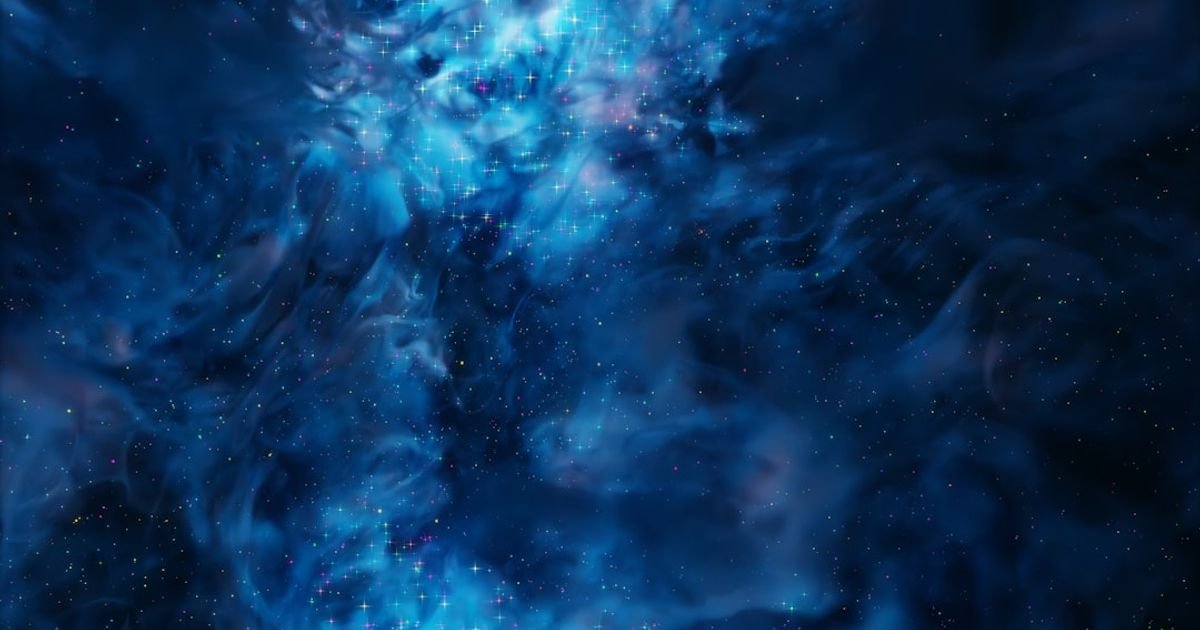
About Prompt
- Prompt Type – Dynamic
- Prompt Platform – ChatGPT, Grok, Deepseek, Gemini, Copilot, Midjourney, Meta AI and more
- Niche – Galactic Science
- Language – English
- Category – Particle Expansion FX
- Prompt Title – Cosmic Dust Explosion VFX Prompt
Prompt Details
—
### **Optimized Dynamic AI Prompt for Cosmic Dust Explosion VFX**
This dynamic prompt is structured as a modular template. You can mix and match elements from each category or replace the bracketed `[Variable]` placeholders with your specific concepts. This structure ensures maximum flexibility and control across various AI image and video generation platforms (like Midjourney, Stable Diffusion, DALL-E 3, Kaiber, RunwayML, etc.) by focusing on descriptive, universally understood language.
—
#### **The Dynamic Prompt Template**
**(1. Core Concept & Action)**
A hyper-detailed, cinematic VFX shot of a `[Primary Subject: e.g., supernova remnant, protostar ignition, colliding nebulae]` undergoing a `[Primary Action: e.g., cataclysmic particle expansion, violent shockwave burst, rapid energetic blossoming]`. The event is captured at `[Moment of Action: e.g., the peak of its energetic release, microseconds after the initial detonation, the slow outward drift of remnants]`.
**(2. Particle System & Matter Dynamics – The “Expansion FX”)**
The core of the explosion consists of an expanding shell of `[Particle Type & Texture: e.g., fine-grained silicate dust, glowing ionized gas filaments, crystalline ice shards, molten metallic motes, quantum foam particulates]`.
The particles exhibit a distinct behavior: `[Particle Behavior: e.g., expanding in a perfect spherical shockwave, jetting out in bipolar cones, spiraling outwards in a turbulent accretion disk pattern, rippling like a wave front, fragmenting into fractal tendrils]`.
The particle distribution is `[Particle Density & Distribution: e.g., a dense, opaque core that rapidly diffuses into a diaphanous, translucent periphery; clumpy and chaotic with areas of high density and near-vacuum; layered with distinct shells of different materials]`. Individual particles should be `[Particle Detail: e.g., visible as sharp, self-illuminated motes; trailing faint streaks of light; catching and refracting light like microscopic prisms]`.
**(3. Energy, Color, & Light Dynamics)**
The scene is illuminated by `[Light Source: e.g., the internal, brilliant energy of the explosion itself; a central blue-giant star; the ionizing radiation from a hidden magnetar; backlighting from a distant galactic core]`.
The dominant color palette is a sophisticated `[Color Palette: e.g., scientific “Hubble Palette” of cyan, gold, and magenta; a fiery supernova palette of intense crimsons, oranges, and deep violets; a cool, ethereal nebula palette of electric blues, soft purples, and faint green from oxygen ions]`.
Light interacts with the particles creating `[Light Effects: e.g., intense volumetric lighting, god rays piercing through the dust clouds, shimmering caustic networks, dramatic lens flares, subtle chromatic aberration on the sharpest points of light]`. The energy release is visible as `[Energy Manifestation: e.g., crackling arcs of plasma, a shimmering heat-haze effect, ghostly trails of neutrinos, gravitational lensing around the core]`.
**(4. Environment & Galactic Context)**
The event is taking place in `[Location: e.g., the vacuum of deep interstellar space; the heart of a dense star-forming molecular cloud; the turbulent edge of a black hole’s event horizon; a protoplanetary disk]`.
The scale is `[Scale: e.g., immense and galactic, spanning hundreds of light-years; stellar-nursery scale; system-wide, engulfing planets]`.
In the background, `[Background Elements: e.g., countless distant, pinpoint stars; the faint spiral arms of a neighboring galaxy; the dark, imposing silhouette of a dark nebula; unresolved stellar clusters]`.
**(5. Compositional & Stylistic Directives)**
* **Camera & Framing:** `[Camera Style: e.g., an epic ultra-wide angle shot emphasizing scale; a macro-detail shot focusing on the particle interaction; a dynamic tracking shot following a particle wave; a telephoto lens view compressing the layers of dust]`.
* **Artistic Style:** `[Primary Style: e.g., ultra-photorealistic NASA/ESA space telescope aesthetic (Hubble/JWST); cinematic blockbuster VFX; scientific visualization diagram; epic digital painting]`.
* **Rendering & Quality:** `[Rendering Details: e.g., hyper-detailed, 8K resolution, physically-based rendering (PBR), sharp focus on the expanding wavefront, Unreal Engine 5 render quality, octane render, complex shaders, no motion blur unless specified]`.
**(6. Optional – What to Avoid)**
`[Negative Prompt: e.g., Avoid 2D or flat-looking effects, blurry textures, cartoonish colors, hard-edged particles, repetitive patterns, planetary bodies unless specified, artificial-looking lens flare]`.
—
### **Breakdown and Best Practices for Use**
1. **Start with the Core Concept (1):** This sets the main subject and action. Be descriptive. “Protostar ignition” is more specific and evocative than “star explosion.”
2. **Detail the Particles (2):** This is the most crucial section for “Particle Expansion FX.” The more detail you provide about the particles’ type, behavior, and density, the better the AI can visualize the effect. Think about the science: a supernova would eject heavy metals, while a protostar would push away hydrogen and dust.
3. **Define the Light and Color (3):** This sets the mood and visual appeal. Using palettes like the “Hubble Palette” gives the AI a well-known, scientifically-grounded visual reference. “Volumetric lighting” is a key term for creating a sense of depth and atmosphere within the dust cloud.
4. **Establish Context (4):** Where is this happening? An explosion in an empty void looks very different from one inside a dense, gassy nebula that will be illuminated by the blast. Scale is critical for the AI to understand if it’s showing a galaxy or a small asteroid.
5. **Direct the “Director” (5):** Specify the camera, style, and quality. Calling out “James Webb Space Telescope aesthetic” will prompt the AI to use high-contrast, infrared-like color schemes and hexagonal lens flares, while “cinematic VFX” will produce something more like a Hollywood movie.
6. **Refine with Negatives (6):** If the AI keeps adding unwanted elements (like planets or cartoony stars), explicitly tell it what to avoid.
—
### **Example Prompt in Practice**
Here is a complete, ready-to-use prompt generated from the dynamic template above.
**Scenario:** The shockwave from a recent supernova hitting a neighboring molecular cloud, triggering a new wave of star formation.
**(Full Prompt)**
**A hyper-detailed, cinematic VFX shot of a supernova shockwave remnant undergoing a cataclysmic particle expansion. The event is captured at the moment the primary shockwave collides with a dense, cold molecular cloud, triggering a violent burst of energy and light.**
**The core of the effect consists of an expanding, multi-layered shell of fine-grained silicate dust and superheated, glowing ionized gas filaments. The particles exhibit a distinct behavior: rippling like a wave front as the shockwave impacts the static nebula, causing the dust to fragment into intricate, fractal tendrils that are pushed outwards. The particle distribution is chaotic and turbulent, with a brilliant, high-density leading edge that diffuses into wispy, translucent curtains of illuminated gas behind it. Individual particles are visible as sharp, self-illuminated motes trailing faint streaks of light.**
**The scene is illuminated by the intense, ionizing radiation from the shockwave itself. The dominant color palette is a sophisticated scientific “Hubble Palette,” with the shockwave glowing in brilliant cyan and gold, while the impacted molecular cloud erupts in vibrant magenta and deep crimson from excited hydrogen atoms. Light interacts with the particles creating intense volumetric god rays that pierce through the newly-formed rifts in the dust cloud. The energy release is visible as crackling, branching arcs of plasma along the shockwave’s leading edge.**
**The event is taking place in the heart of a dense star-forming region of the Carina Nebula. The scale is immense and galactic, spanning hundreds of light-years. In the background, countless distant, pinpoint blue stars of the surrounding star cluster are visible, along with the dark, imposing silhouettes of other undisturbed dust pillars.**
**Camera & Framing: An epic ultra-wide angle shot, emphasizing the colossal scale of the impact and the delicate, filigree structure of the resulting explosion.
Artistic Style: Ultra-photorealistic James Webb Space Telescope (JWST) aesthetic, focusing on high-contrast infrared light and extreme clarity.
Rendering & Quality: Hyper-detailed, 8K resolution, physically-based rendering, with tack-sharp focus on the expanding wavefront and intricate particle interactions.**
**Avoid: Blurry or soft-focus effects, 2D flat textures, unrealistic cartoonish colors, any visible planets or man-made objects.**