
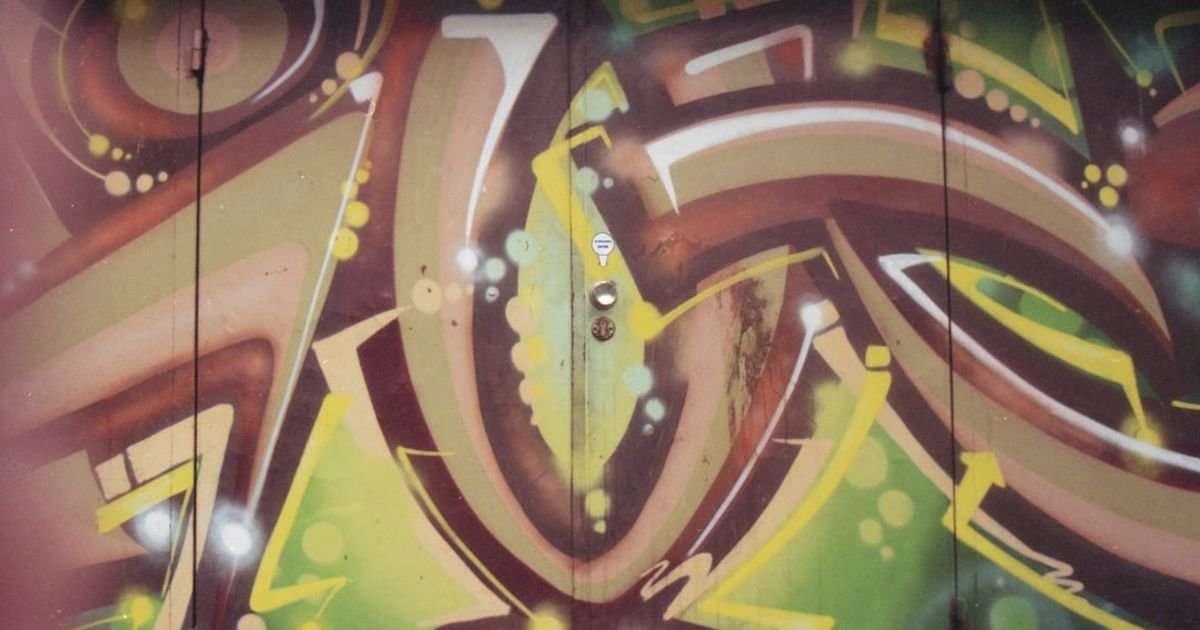
About Prompt
- Prompt Type – Dynamic
- Prompt Platform – Google Gemini
- Niche – Urban creativity
- Language – English
- Category – Art Video
- Prompt Title – Street art graffiti animation prompt Gemini
Prompt Details
—
### **Optimized AI Prompt Template for Gemini: Urban Creativity Niche**
**`[PROMPT START]`**
**1. ROLE & GOAL:**
Act as a visionary motion graphics director and street art historian with a deep understanding of urban culture, animation techniques, and visual storytelling. Your goal is to generate a detailed concept and a shot-by-shot storyboard script for a dynamic art video focused on street art and graffiti. The final output should be evocative, authentic, and cinematically compelling, suitable for platforms like Vimeo, Instagram, or art gallery installations.
**2. CORE CONCEPT & THEME:**
The central theme for this animation is: **`[Insert the core concept or narrative of your video. For example: “The dialogue between man-made structures and organic art,” “The 24-hour life cycle of a single piece of graffiti,” “A battle of styles between two rival artists on the same wall,” or “The city breathing through its murals.”]`**
This concept should explore the deeper meaning of urban creativity, focusing on elements like ephemerality, rebellion, community voice, or the reclamation of public space.
**3. AESTHETIC & VISUAL STYLE:**
This section defines the entire look and feel of the animation. Be highly specific.
* **Primary Graffiti Style:** `[Choose and describe the dominant style(s). Examples: Photorealistic Murals, Abstract Graffiti, Old-School Wildstyle, Stencil Art (a la Banksy), Wheatpaste Posters, Sticker Slaps, Calligraffiti, 3D Anamorphic Art.]`
* **Animation Technique & Style:** `[Describe how the art will come to life. Examples:
* **Gritty Stop-Motion:** Capturing the physical act of painting, with textures like paint drips, spray can mist, and crumbling brick being central.
* **Fluid 2D Cel Animation:** The graffiti characters or letters peel off the wall and move with liquid-like motion.
* **Digital Morphing/Data Moshing:** Abstract tags and shapes glitch and transform into new forms, representing the digital age’s influence on street art.
* **Kinetic Typography:** Letters and words from tags animate and flow across the urban landscape.
* **Rotoscoping:** Live-action footage of the city or people is traced over with an animated graffiti texture.]`
* **Color Palette & Mood:** `[Describe the color journey and the corresponding emotion. Examples:
* **Monochromatic & Gritty:** Starts with high-contrast black and white, evoking a raw, noir feel.
* **Neon-Soaked Cyberpunk:** Saturated blues, pinks, and cyans against a dark, rainy cityscape.
* **Sun-Bleached & Vibrant:** Warm yellows, oranges, and teals that feel optimistic and energetic, typical of a coastal city.
* **Earthy & Muted:** Tones of brick red, concrete grey, and moss green, emphasizing the harmony or conflict with the environment.]`
* **Artistic & Cinematic Influences:** `[List 2-4 specific artists, animators, or filmmakers to serve as reference points. Examples: The kinetic energy of Jean-Michel Basquiat’s paintings, the narrative scale of street artist Blu’s animations, the atmospheric lighting of cinematographer Roger Deakins, the frenetic editing style of a Spike Jonze music video.]`
* **The Urban Environment:** `[Describe the setting. This is a character in itself. Examples: A forgotten, dilapidated industrial zone in post-Soviet Eastern Europe; a bustling, neon-lit back alley in Tokyo; the sun-drenched, colorful favelas of Rio de Janeiro; the historic, cobblestoned streets of a European capital.]`
**4. NARRATIVE ARC & DYNAMIC ELEMENTS:**
This is the story. Describe the progression from beginning to end.
* **Opening:** `[How does the animation begin? E.g., A single drop of ink falls onto a blank concrete wall, spreading like a virus; A time-lapse of the sun rising over the city, revealing a faded old mural.]`
* **Development/Escalation:** `[What happens in the middle? E.g., The initial tag is quickly covered by a more complex “throw-up,” which then sparks a “war” as a massive, colorful “piece” begins to dominate the wall. The art could start to interact with its environment—a painted bird flies off the wall and perches on a real-life wire.]`
* **Climax:** `[The peak moment of the animation. E.g., The entire building is covered in a symphony of interconnected murals that animate in unison, pulsing with light and energy to the beat of the music; The central character of the mural steps off the wall and walks through the city.]`
* **Resolution/Ending:** `[How does it conclude? E.g., The rain begins to fall, washing the art away, leaving ghostly traces; The city council paints over the wall in a flat, sterile grey, but a tiny new tag appears in the corner, signaling the cycle will begin again; The camera pulls back to reveal the art is part of a much larger, city-wide network of creativity.]`
**5. TECHNICAL SPECIFICATIONS:**
* **Target Video Length:** `[e.g., 30 seconds, 90 seconds, 3 minutes]`
* **Pacing & Rhythm:** `[e.g., Frenetic and fast-paced with quick cuts, meditative and slow-building, rhythmic and hypnotic, synchronized to a specific BPM.]`
* **Sound Design & Music:** `[This is crucial. Be specific. e.g., “An atmospheric lo-fi hip-hop track with layered sounds of the city: distant sirens, rattling subway cars, and the distinct ‘shk-shk’ and hiss of a spray can. The animation’s movements should sync with the drum beat.” OR “An epic, orchestral score that builds to a crescendo, with minimal ambient sound to create a sense of grandeur.”]`
**6. REQUIRED OUTPUT FORMAT:**
Please generate a detailed, scene-by-scene storyboard script based on all the parameters above. Use the following structure for each scene for maximum clarity:
* **SCENE #:** (e.g., SCENE 1)
* **TIMESTAMP:** (Approximate time, e.g., 0:00-0:10)
* **VISUALS:** (Describe the static environment and the main subject of the shot.)
* **ANIMATION:** (Describe all movement, transformations, and visual effects in detail.)
* **CAMERA:** (Describe camera movement, angle, and shot type. E.g., “Macro shot, slow push-in,” “Dynamic whip-pan tracking the paint spray.”)
* **SOUND:** (Describe the specific music and sound effects for this scene.)
**7. CONSTRAINTS & GUIDELINES:**
* Emphasize texture and imperfections. The final look should feel tactile and authentic, not like clean, sterile vector animation. Show paint drips, overspray, and the rough texture of the wall.
* Avoid clichés unless they are being intentionally subverted.
* Focus on the *process* and *energy* of creation, not just the final result.
**`[PROMPT END]`**
—
### **Example Prompt in Practice**
**`[PROMPT START]`**
**1. ROLE & GOAL:**
Act as a visionary motion graphics director and street art historian with a deep understanding of urban culture, animation techniques, and visual storytelling. Your goal is to generate a detailed concept and a shot-by-shot storyboard script for a dynamic art video focused on street art and graffiti. The final output should be evocative, authentic, and cinematically compelling, suitable for platforms like Vimeo, Instagram, or art gallery installations.
**2. CORE CONCEPT & THEME:**
The central theme for this animation is: **”Concrete Metamorphosis,”** telling the story of a single, forgotten urban wall as it lives, breathes, and evolves through layers of graffiti over several decades, representing the city’s changing cultural identity.
**3. AESTHETIC & VISUAL STYLE:**
* **Primary Graffiti Style:** A layered historical progression: Begins with simple, 1980s New York-style bubble-letter “throw-ups,” which get covered by 1990s complex “Wildstyle” pieces, then partially obscured by 2000s-era political stencil art, and finally integrated into a modern, large-scale photorealistic mural.
* **Animation Technique & Style:** A hybrid approach. The application of paint is shown with gritty, textured **stop-motion**, making each layer feel physical. When the art is “complete,” it animates with fluid **2D cel animation**, where letters untangle themselves or characters in a mural subtly move and interact.
* **Color Palette & Mood:** The palette evolves with the eras. **80s:** A limited, vibrant palette of primary colors (red, yellow, blue) on grey concrete. **90s:** Explodes with a full spectrum of clashing, neon-saturated colors. **2000s:** Shifts to a stark, high-contrast black, white, and red for the stencil art. **Present Day:** A sophisticated, photorealistic palette with subtle gradients and deep shadows.
* **Artistic & Cinematic Influences:** The raw energy of the documentary *Style Wars* (1983), the large-scale narrative animation of the artist Blu, and the time-lapse cinematography of Ron Fricke’s *Koyaanisqatsi*.
* **The Urban Environment:** A single, weathered brick wall in a back alley that shows the passage of time. The surrounding environment subtly changes: a flickering fluorescent light becomes a modern LED, old payphones disappear, etc.
**4. NARRATIVE ARC & DYNAMIC ELEMENTS:**
* **Opening:** A grainy, 4:3 aspect ratio shot of the blank wall in the 80s. A hand appears and, in fast stop-motion, a simple bubble-letter tag is sprayed on.
* **Development/Escalation:** Time speeds up. The first tag is covered by another, and another. The aspect ratio widens to 16:9 as we enter the 90s. A complex Wildstyle piece is animated, with its arrows and letters interlocking like a mechanical puzzle. As we transition to the 2000s, a stencil of a protestor is “sprayed” over a section of the art, and its shadow briefly animates, moving as if alive.
* **Climax:** The modern era. A new artist arrives. Using stop-motion, we see the creation of a massive, photorealistic mural of an elderly woman’s face. The mural incorporates the old, faded layers of graffiti as the “wrinkles” and “memories” on her face. At the climax, her eyes, animated in 2D, slowly open and blink, looking out at the viewer.
* **Resolution/Ending:** The camera holds on the woman’s eye. In the reflection, we see the modern city. The camera slowly pulls back, showing the complete wall—a rich tapestry of history. The video ends as a child walks by, touching the wall in wonder.
**5. TECHNICAL SPECIFICATIONS:**
* **Target Video Length:** 2 minutes.
* **Pacing & Rhythm:** Begins with a punchy, staccato rhythm, becomes a frenetic crescendo during the Wildstyle section, has a stark and quiet moment for the stencil, and concludes with a slow, majestic, and emotional pace.
* **Sound Design & Music:** The music evolves with the eras. **80s:** Old-school electro-funk and breakbeats. **90s:** A classic boom-bap hip-hop instrumental. **2000s:** A gritty, atmospheric trip-hop track. **Modern:** A cinematic, ambient electronic score. All sections are layered with authentic spray can hisses, city ambience, and the sound of crumbling brick.
**6. REQUIRED OUTPUT FORMAT:**
Please generate a detailed, scene-by-scene storyboard script based on all the parameters above. Use the following structure for each scene for maximum clarity:
* **SCENE #:**
* **TIMESTAMP:**
* **VISUALS:**
* **ANIMATION:**
* **CAMERA:**
* **SOUND:**
**7. CONSTRAINTS & GUIDELINES:**
* Emphasize texture and imperfections. The final look should feel tactile and authentic, not like clean, sterile vector animation. Show paint drips, overspray, and the rough texture of the wall.
* Avoid clichés unless they are being intentionally subverted.
* Focus on the *process* and *energy* of creation, not just the final result.
**`[PROMPT END]`**